
lunes, 29 de mayo de 2017

lunes, 8 de mayo de 2017

martes, 18 de abril de 2017
UNIT 7 NATURAL SCIENCE: ENERGY

WHAT IS ENERGY?
Energy is the ability to do work or cause changes. It
is present everywhere and in everything.
Energy causes the changes we see around us. For
example, energy makes a ball at rest move when it is kicked.
Energy can exist in many forms. Chemical energy, light
energy, nuclear energy, mechanical energy, thermal energy and electrical energy
are different forms of energy. The energy we use on a daily basis is obtained
from different energy sources.
lunes, 13 de marzo de 2017

lunes, 6 de marzo de 2017

viernes, 10 de febrero de 2017
UNIT 6: Spain in the 20th century
At the end of the 18th century, new means of transport were developed and workshops were replaced by factories
Spain at the beginning of the 20th century
The reign of Alfonso XIII
 Alfonso XIII was the last king of the Restoration era. He was the son of Alfonso XII and was proclaimed king in 1902. During his reign, there were serious social and political conflicts in Spain. For example:
 - Strikes. These were organized by labour unions.
- Nationalism. Groups in Catalonia, the Basque Country and Galicia demanded autonomy.
- The war in Morocco. Many Spanish soldiers died and Spain lost territories in Northern Africa.
The dictatorship of Miguel Primo de Rivera
 Taking advantage of the social and political conflict, General Primo de Rivera led a coup in 1923. In a coup, a person or a group takes control of a government by force. Primo de Rivera established a military dictatorship. He assumed all powers of state, abolished the Constitution, banned all political parties and labour unions, and limited freedom for citizens. King Alfonso XIII supported the dictatorship, but he was not part of the government.
Primo de Rivera won the war with Morocco, and many roads, railways and other public works were built under his rule. However, the population opposed his regime and demanded more freedom. In 1930, Primo de Rivera lost the support of the king and had to resign.
General elections were held in 1931. The political parties that supported a republic won, and Alfonso XIII went into exile.
The Second Spanish Republic
In 1931, the Second Spanish Republic was proclaimed and Alcalá Zamora was appointed president of the Republic.
A new Constitution was approved, which included the right to vote for women and the separation of church and state. During this period, the first Statutes of Autonomy for Catalonia and the Basque Country were also approved.
The government of the Republic implemented many reforms, including land, education and labour reforms. However, these reforms were not accepted by everyone, and violent conflicts escalated over time.
The Spanish Civil War
In 1936, General Francisco Franco led a coup against the government of the Republic. This started the Spanish Civil War, which lasted until 1939. During the war, the Spanish population was divided into two areas: the Republican area, which supported the Republic, and the Nationalist area, which supported General Franco.
The consequences of the war were devastating. Hundreds of thousands of people died or went into exile, there were huge economic losses, and society was divided into winners and losers.


The dictatorship of Francisco Franco
 After the war, General Francisco Franco took power and established a dictatorship that lasted more than thirty years. 1 This period, from 1939 to 1975, is known as Francoism. As a result of establishing a dictatorship:
- The Constitution was abolished. New laws that restricted individual liberties were passed.
- All power was concentrated in one person.
- Political parties and labour unions were banned.
- The Statutes of Autonomy were revoked.
- Censorship was put into place.
The first years of Franco’s dictatorship
The first years of the dictatorship were difficult. People who had supported the Republic faced harsh repression. Many were arrested or killed, and others went into exile.
During these years, Spain became internationally isolated. As a result of the Spanish dictatorship, many countries broke off diplomatic and commercial relations with Spain.
The changes in Franco’s dictatorship
From the 1950s, Spain started to become accepted internationally. During this period, many agreements were signed with different countries, including the United States.
In 1955, Spain was accepted as a member of the United Nations (UN). From 1960, the economy started to improve: industrial production increased, agriculture was modernized with new machinery and new infrastructure was developed. Tourism became one of the main economic activities.
As a result of these changes, the standard of living in Spain improved. However, there was still no democracy. The dictatorship still controlled the population, and people who opposed the regime were arrested.


The end of Franco’s dictatorship
Between 1970 and 1975, opposition to the Franco regime escalated. Labour unions were still banned, but they started to organize underground, which means they met in secret. In addition, students participated in demonstrations that demanded a democratic form of government.
On 20th November, 1975, General Franco died and the dictatorship ended. It was the beginning of a new era in which democracy was established.
Transition and democracy
Juan Carlos I, King of Spain
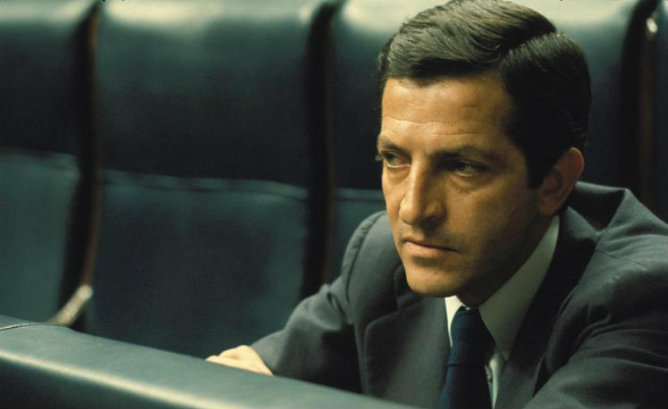 After the death of General Franco, Juan Carlos I, grandson of Alfonso XIII, was crowned King of Spain. In 1976, the king appointed Adolfo Suárez as president. A series of reforms were adopted so that Spain could once again become a democratic country:
- Political parties and labour unions were legalized.
- Political prisoners were released.
- People in exile returned to Spain.
- The first democratic elections since 1936 were held.
- Elections took place in 1977 and the Central Democratic Union (UCD) was elected, the party led by Adolfo Suárez.
The Constitution of 1978
After the 1977 elections, representatives of the major political parties wrote a constitution which was approved by Parliament. In 1978, Spaniards voted in favour of the Constitution in a referendum.
The Constitution of 1978 establishes that Spain is a democratic country, whose national sovereignty resides with the Spanish people, with a parliamentary monarchy as a form of government.
It also guarantees citizen rights such as equality under the law, freedom of expression and the right to vote for all citizens over eighteen years of age. The Constitution also recognizes the organization of Spanish territory in autonomous communities.
The democratic governments
 Since 1981, several presidents have headed the Spanish government.
 - 1981: Leopoldo Calvo Sotelo, UCD. Spain became a member of NATO, a military alliance.
- 1982 to 1996: Felipe González, PSOE (Spanish Socialist Labour Party). González carried out reforms to modernize the country. In 1986, Spain joined the European Community (EC).
- 1996 to 2004: José María Aznar, PP (Popular Party). Economic stability was achieved. In 2002, Spain adopted the euro as its currency, replacing the peseta.
- 2004 to 2011: José Luis Rodríguez Zapatero, PSOE. Laws that extended the rights of citizens were passed. In the last years of his mandate, the economic crisis caused unemployment to rise sharply.
- Mariano Rajoy from PP was elected in 2011. Very strict measures were taken to fight the serious economic crisis. In 2014, King Juan Carlos I abdicated in favour of his son, Felipe VI.

Art and culture in the 20th century and the present day
During the 20th century, the main Spanish artists were Pablo Ruiz Picasso, Salvador Dalí and Joan Miró.
- Pablo Ruiz Picasso was born in Malaga. He invented Cubism. In this innovative painting style, three-dimensional human figures and objects are represented with different geometrical shapes.

- Salvador Dalí was born in Figueras (Girona). He used light, colour and drawings to express the world of dreams.

- Joan Miró was born in Barcelona. He used bright colours and geometrical shapes to create a fantasy world similar to the world of a child.

lunes, 6 de febrero de 2017
UNIT 5 NATURAL SCIENCE: THE REPRODUCTION

SEXUAL CHARACTERISTICS AND THE REPRODUCTIVE SYSTEM
Sexual characteristics are the physical
differences that exist between men and women. Sexual characteristics are
classified into:
- Primary sexual characteristics: these are the reproductive organs, also known as the genital organs. We are born with these characteristics.
- Secondary sexual characteristics: these refer to other physical differences between men and women. For example, men have facial hair, a deeper voice, more body hair and more developed muscles. Women develop breasts and have wider hips, a higher voice and less body hair.
jueves, 5 de enero de 2017
UNIT 5 SOCIAL SCIENCE: CONTEMPORARY HISTORY: SPAIN IN THE 19th
THE 19th CENTURY
THE WAR OF INDEPENDENCE
In 1807, Napoleón Bonaparte, the Emperor of France, decided to occupy Portugal. The King of Spain, Carlos IV, allowed him to cross Spain. On their way, the French troops invaded some Spanish cities. This caused a popular revolt which forced Carlos IV to abdicate. His son, Fernando VII, became king.
Soon after, Napoleón forced Fernando VII to abdicate so he could proclaim his brother, Jose Bonaparte, the new king.
miércoles, 4 de enero de 2017
UNIT 4 NATURAL SCIENCE: NUTRITION II
CIRCULATION
Circulation is one of the four processes involved in nutrition, along with digestion, reparation and excretion. Circulation involves transporting nutrients, oxygen and waste products throughout the body.

martes, 22 de noviembre de 2016
UNIT 4 SOCIAL SCIENCE: HISTORICAL TIME
WHAT IS HISTORY?
History studies the past of people. In order to date the events that ocurred in the past, historians use units of time. In history, we use mainly years and centuries as units of time.

domingo, 20 de noviembre de 2016
UNIT 3 NATURAL SCIENCE: NUTRITION
WHAT IS THE NUTRITION?
The nutrition is a combination of processes which supply our body with the building materials and energy we need to live.
NUTRIENTS
Food contains simple substances called nutrients, which provide the building materials and energy our body needs to grow and work. Nutrients are classified into groups:
- Carbohydrates: provide a fast supply of energy. We can find it in cereals, potatoes, bread, pasta...
- Fats: provide a slower supply of energy. They are mainly found in oils and butter.
- Proteins: provide building materials for growth and to repair our body. They are mainly found in meat, fish, eggs, milk...
- Vitamins and minerals: are necessary for our body to function properly. They are mainly found in fruit, vegetables and dairy products.
- Water: transport other nutrients and waste around the body.
jueves, 3 de noviembre de 2016

viernes, 14 de octubre de 2016
UNIT 2 NATURAL SCIENCE: THE LOCOMOTOR SYSTEM
The locomotor system consists of bones and muscles that work together so we can move. The locomotor system is involved in the function of sesitivity. It carries out the orders sent from the brain by producing movement.
martes, 11 de octubre de 2016
UNIT 2 SOCIAL SCIENCE: SPANISH CLIMATES AND THE TERRITORIAL ORGANIZATION OF SPAIN
WEATHER AND CLIMATE
Weather is the state of the atmosphere al specific time and place.
Climate is the weather in a particular region over a long period of time.
- What is the weather like today in your town?
- What kind of climate does your region have?
sábado, 17 de septiembre de 2016
UNIT 1 NATURAL SCIENCE: THE NERVOUS SYSTEM

Which are the three vital functions?
- Nutrition: it is a combination of processes by which living things obtain the nutrients and the energy they need to live.
- Interaction: all living beings ineract with their enviroment and with other living beings to survive. Interaction enables living beings to receive and respond to a stimulus.
- Reproduction: it is the biological process by which new individual organisms are produced.
jueves, 15 de septiembre de 2016
UNIT 1 SOCIAL SCIENCE: THE RELIEF OF SPAIN
 Where is Spain?

Spain consists of most of the Iberian Peninsula, the Balearic Islands, the Canary Islands and the autonomous cities of Ceuta and Melilla on the North of Africa.

Spanish borders:
- North: Cantabrian Sea, France and Andorra.
- South: Mediterranean sea, Atlantic Ocean and Morocco.
- East: Mediterranean Sea.
- West: Atlantic Ocean and Portugal.
martes, 13 de septiembre de 2016
Notebook rules
If you want to get the best mark in your notebook, you will follow these instructions properly:
- Keep your notebook clean.
- Date each page and the date must be written in red.
- Class notes have to be written with blue pen.
- You have to write your name and class in the cover.
- Create a cover page.
- No ripped out pages.
- Notebook should be used for science only.
- Write neatly and legibly.
- All pictures must be painted.
- You can use colors and markers to write different tittles.
viernes, 9 de septiembre de 2016
Welcome to new academic course!

If you want to get a great marks, it's very easy, you only have to work a little day by day. The standars of evaluation are the next ones:
- 60% Exam.
- 30% Notebook.
- 10% Behaviour and attitude.
Suscribirse a:
Entradas (Atom)